Renin-Angiotensin System
Introduction
Once the domain of physiologists and hypertension physicians , the renin-angiotensin system (RAS) has also become the property of nephrologists. The physiology exposed the pathophysiology and then the pharmacology provided the therapies. RAS blockade is now the single most important part of CKD management. The relationship was neatly turned upside down. The belief that “essential hypertension” caused renal disease and renal diseases cause hypertension, evolved to the concept of hypertension driving renal disease – not true directly, but by the adverse and unwanted effects of RAS activation on the glomerulus.
What was the UK contribution to understanding the RAS?
The first part of the story is beautifully told by Sir George Pickering in Chapter 6 of his book “High Blood Pressure” (Pickering GW. High Blood Pressure 2nd Edition 1968 J&A Churchill Ltd London). I inherited a copy from Dr Desmond Oliver who was Pickering’s First Assistant when he was Regius Professor of Medicine in Oxford. Renin was first described by a Finnish physiologist Robert Tigerstedt in 1898.
Sir George Pickering FRS (1904-1980).
In 1936 Pickering, working in London, extracted , purified and assayed renin. That renin was an enzyme was discovered by another research group who agreed to call the product angiotensin (later angiotensin-1). The isolation of angiotensin was achieved by Dr (later Sir)Stan Peart at St Mary’s Hospital, London in 1956 (Nature 1956; 177: 527-8). It was Skeggs’ group who identified the converting enzyme that removed two amino acids from the decapeptide angiotensin-1 to form angiotensin-2, a much more active molecule. In 1966 Peart published his method of the purification of human renin (Biochim Biophys Acta. 1966;122:289-97). Peart’s major contributions in this field earned him election as FRS.
 Sir Stan Peart FRS (1922-2019)
Credit for the characterisation of the angiotensinases goes to the Argentinian, Braun-Memendez working in Buenos Aires. The site of synthesis of renin in the kidney was shown by Cook and Pickering to be from fragments of a structure closely adjacent to glomeruli. The source proved to be granular cells on the afferent arterioles hence the term the juxtaglomerular apparatus or JGA. This work was published in a single author paper by WF Cook (J Physiol 1960; 152:27). The best description of renin concentrations in in a range of disease states were later provided by Brown, Lever and Robertson in 1966 (Postgraduate Medical Journal 1966;42:129-138).
Role of the RAS in hypertension
Once the physiology of the RAS was understood its role in hypertension was explored. There was disappointment – it did not seem to have a significant role in “essential hypertension.” However, activation of the RAS did help explain the hypertension associated with renal artery stenosis. A competitive angiotensin-2 receptor antagonist was used to try to differentiate renovascular from essential hypertension. It proved unreliable. One gets the impression that the RAS was seen as just an interesting homeostatic system a bit like the coagulation and complement cascades.
Introduction of ACE inhibitors
It came back into the limelight after the discovery by British pharmacologist, John Vane and the Brazilian, Sergio Ferreira, that a peptide in a snake venom inhibited the angiotensin converting enzyme (ACE). The discovery was shared with the Squibb pharmaceutical company where two clever chemical pharmacologists synthesised an oral form of the inhibitor which they called SQ 14225, later named captopril. Its effect in hypertension was thoroughly investigated by the team at the MRC Blood Pressure Unit in Glasgow (Lancet 1979; 314:836 -9). It was then used as a second line anti-hypertensive agent for those patients with resistant hypertension. Dr John Ledingham a general physician with an interest in hypertension and renal disease at the John Radcliffe Hospital in Oxford, described a series of “difficult” patients successfully treated (Lancet 1980;ii:108-110).
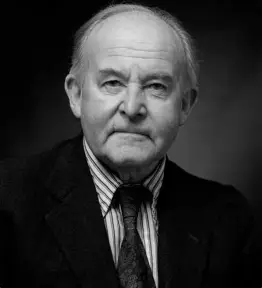
 John Ledingham (1929-2023)
Captopril became a lifesaving drug in scleroderma crises and later an important component of heart failure treatment.
Early concerns about the risks of ACE inhibitors
There was however a degree of hesitancy and scepticism about the role of captopril in the treatment of hypertension as an acute effect causing sudden reduction in blood pressure was feared. There were memories of strokes in patients with malignant hypertension treated with IV diazoxide so patients were admitted to receive their first doses under hospital supervision. This precaution followed the finding by the MRC Blood Pressure Unit in Glasgow that one third of patients experienced a fall in systolic BP of >50mm Hg. 10% experience transient cerebral ischaemia. This problem was more common in those with secondary hypertension, severe hypertension and not surprisingly those with raised angiotensin-2 concentrations (Br Med 1983;286:832-4). There was also a concern that the GFR would fall after introduction of captopril. Indeed, there were reports of patients with bilateral renal artery stenosis or stenosis in a single kidney becoming temporarily anuric. The fall in GFR was usually minor and explained by the effect on renal haemodynamics; but in a minority of cases was not reversible (J Intern Med. 1992 Dec;232:493-8). Nevertheless, NICE guidelines still recommend checking the GFR 1-2 weeks after introduction or an increase in dose. Later it was realised that angiotensin-2 blockade induces a degree of hypoaldosteronism that results in a rise in plasma K+. This induces a lot of anxiety and often the inappropriate withdrawal of the ACE inhibitor. The effect can be countered by administration of 9-alpha fludrocortisone but this not usually necessary.
ACE inhibition in progressive renal disease
It took several years for the possibility to emerge that ACE inhibitors could benefit patients with progressive renal disease. It was not British nephrologists who spotted the potential. The Brenner hypothesis, developed in the USA posited that damaged kidneys hyperfiltered and developed glomerular hypertension as a consequence of efferent arteriole vasoconstriction (mediated by angiotensin-2), which, independent of the primary pathology, caused and exacerbated glomerular injury. This was thought to be particularly relevant in diabetic nephropathy. It was reckoned that ACE inhibitors could reduce hyperfiltration and intra-glomerular hypertension by reducing efferent arteriolar vasoconstriction. The key papers describing experiments in rats with surgically induced reduction of nephron mass were supportive (J Clin Invest 1985;76:612-9).
The seminal paper testing captopril in patients with Type 1 diabetes and proteinuric nephropathy was published in the New England Journal of Medicine in 1993 by Ed Lewis on behalf of the Collaborative Study Group (New Engl J Med 1993;329:1456-1462). The conclusion was that captopril reduced the rate of deterioration in renal function and was significantly more effective than similar blood pressure control achieved by other drugs, In 1997 the Italian GISEN group published their findings of the effect of ramipril a convenient once a day ACEI in non-diabetic nephropathy. They showed a benefit in those patients with heavy proteinuria (>3g/day) but not in those with < 3g/day (Lancet 1997;349`;1857-1863).
It is disappointing that the UK which was in the vanguard of research into the RAS and the identification of ACE inhibition was not involved in this clinical application.
Author: Chris Winearls
Last Updated on April 22, 2026 by John Feehally